
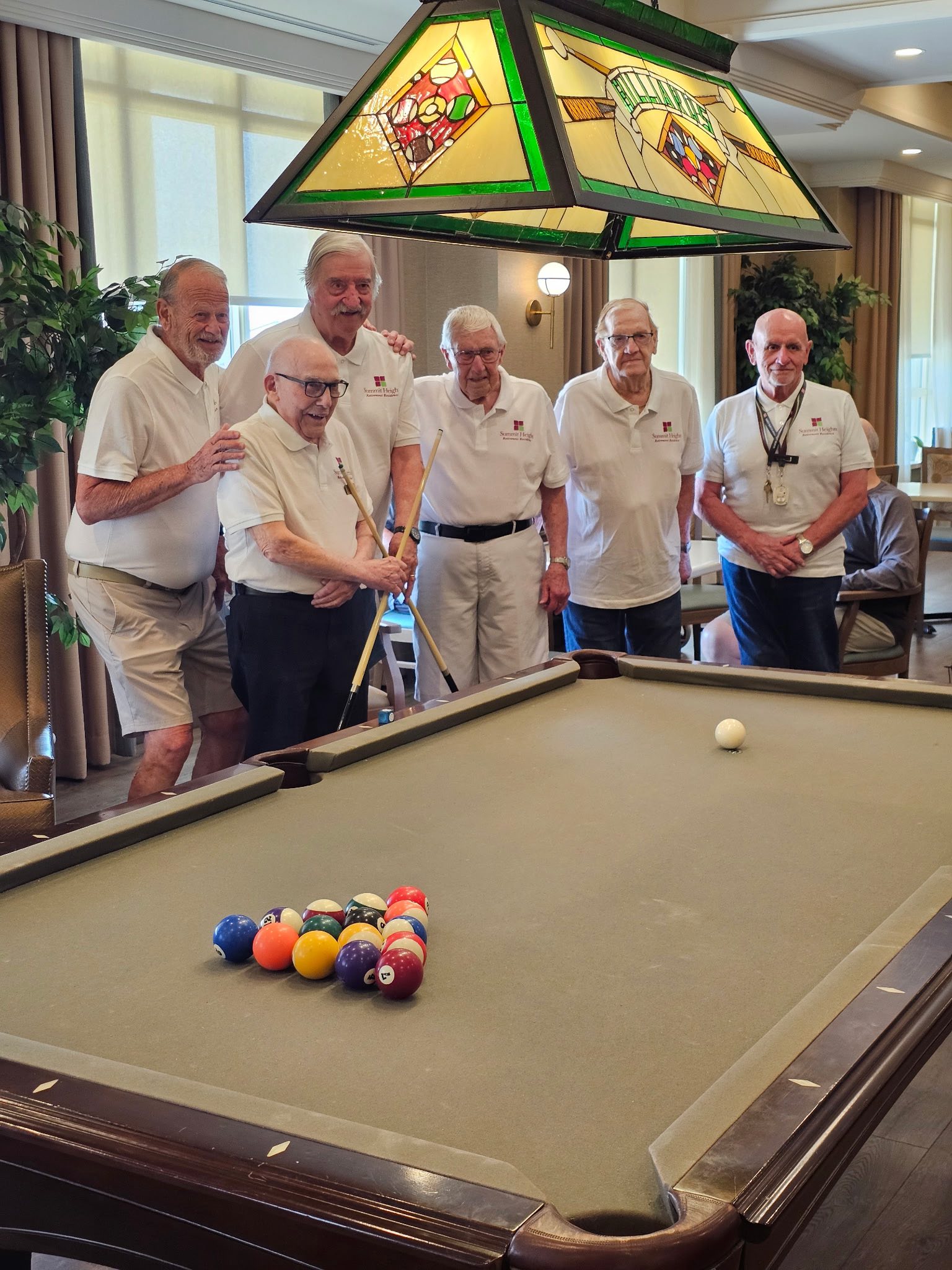
At first glance, it looks like a group of men around a pool table, chalking cues and lining up the perfect shot. But look a little closer, and you’ll see something far more meaningful. It’s a group of men building bonds.
Men’s groups – or clubs – play a significant role in enhancing the well-being of their members, particularly in retirement residences. These groups provide a place where men can show up exactly as they are; a place to share experiences and support each other. The benefits of groups focused on men are manifold, touching on aspects of mental health, social engagement, and personal growth, all of which are crucial in the later stages of life.
The Importance of Men’s Groups in Retirement
 The concept of a “Men’s Shed” is becoming increasingly popular in various communities around the world, offering a unique space for men to gather, share skills, and work on projects. The Men’s Shed idea is simple: a place to go, guys to talk to, something to do.
According to Rob Holland, Lifestyle Director at Lakeridge Heights senior living centre in Whitby, ON, it’s important to recognize men for what they bring to the community. “While groups, activities, and other offerings are universally enjoyable for all our residents”, says Holland, “some activities — like men’s clubs — put the focus on men’s traditional interests and let’s them know that there is something for them at the residence.”
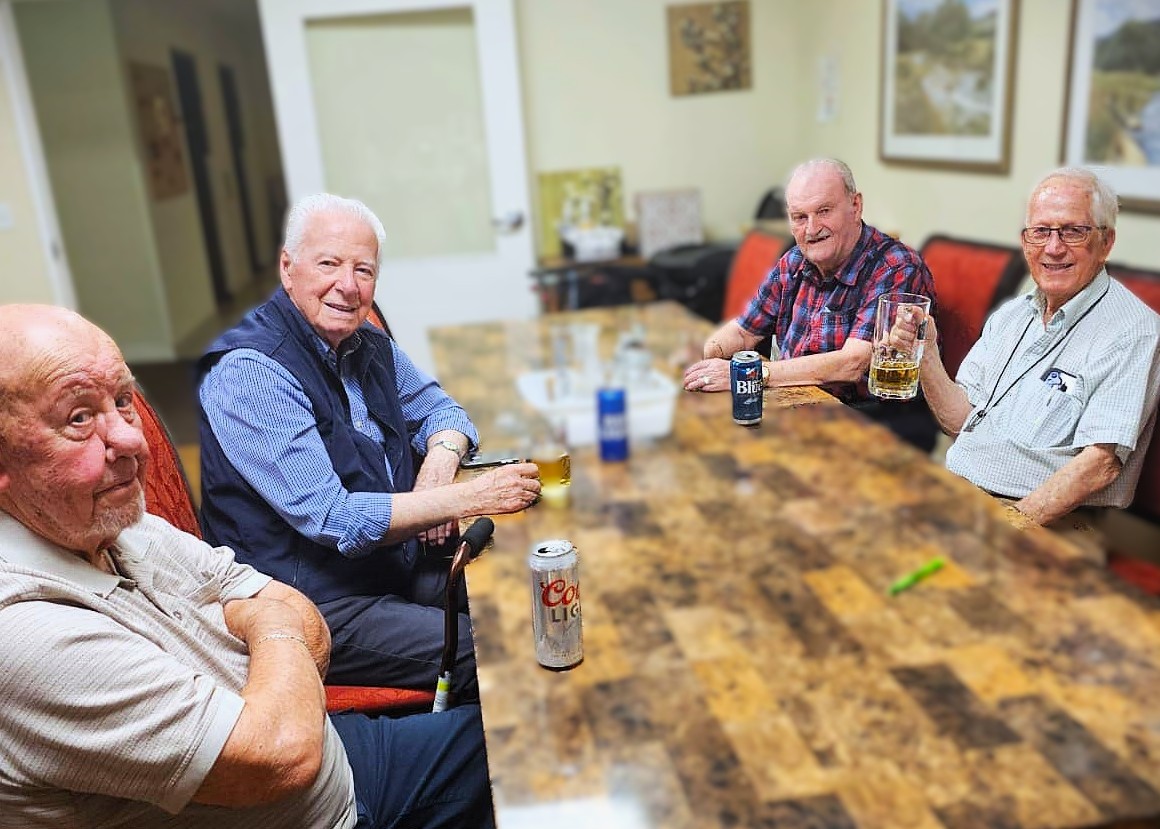
This month, Lakeridge is celebrating International Men’s Day with a pub lunch outing — always a hit with the gentlemen!
“Men living in our senior apartments are very active,” he says. “Every week they get together to play pool or poker, or just gather for a chat. They’re very social.”
Throughout November, the residence is also hosting Memory Care Men’s Clubs, where residents experiencing cognitive decline can enjoy non-alcoholic beer, snacks, a few rounds of pool, and some trivia. Why is this important? Meaningful activities in a social setting can improve quality of life and in some cases have even been shown to slow down the progression of dementia.
Shoulder To Shoulder: More Than Just a Men’s Club
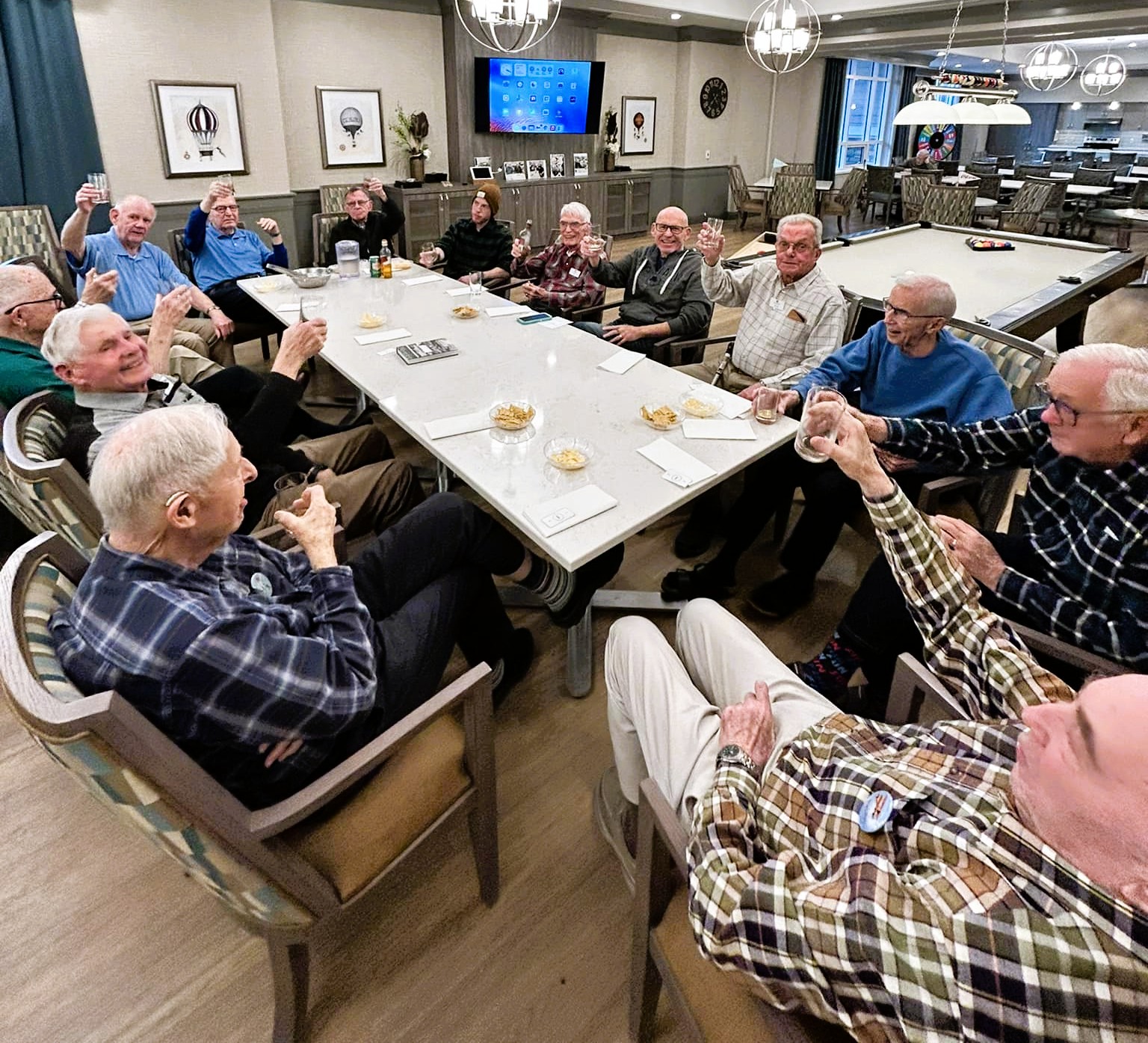 Simply put, hanging with the guys improves quality of life. Social engagement is a key benefit of men’s groups in senior living communities. These groups include a variety of activities, such as outings, hobby-based clubs, and educational workshops, that cater to diverse interests and abilities.
The bonds formed through shared experiences and interests can lead to lasting friendships, which are vital for overall well-being. For many men, these groups offer an opportunity to rebuild their social networks, which may have faded due to retirement, relocation, or the loss of a spouse. Here are just a few of the benefits:
1. Personal Growth and Development
Learning new information and skills is important for healthy aging. Through a variety of programs and activities like We Can Build It Workshops or Men’s Shed, residents are encouraged to explore new interests, learn new skills, and engage in lifelong learning. This not only enriches their lives but also contributes to their sense of self-worth and identity.
2. A Sense of Purpose and Productivity
The transition to retirement can sometimes leave individuals feeling a lack of purpose, especially if their identity was closely tied to their career. Engaging in projects and activities offers a sense of achievement and productivity.
Doing things with other men, particularly if there is an intergenerational component, is an opportunity to share skills and knowledge. This exchange of expertise is not only intellectually stimulating but also helps preserve practical skills and traditions that might otherwise be lost.
3. Mentorship, Mental Health, and Support
Men have a wealth of experience to share. A men’s group provides a community where individuals can share those experiences, as well as the challenges, and successes of life. Hanging with ‘the guys’ can be a ton of fun, while also serving as a safe space to discuss topics they might not feel comfortable addressing elsewhere. The open exchange helps to normalize discussions around mental health, reduce stigma, and encourage members to ask for help when needed.
The camaraderie and understanding within the groups can significantly alleviate feelings of loneliness and isolation, promoting a more positive outlook on life. This is particularly important for those who find themselves the caregiver for a spouse or loved one.
4. Challenges and Coping Strategies
Men’s groups also play a crucial role in helping members navigate the challenges of aging. Discussions and workshops on topics such as retirement planning, caregiving, and bereavement provide valuable information and coping strategies. Sharing personal experiences and advice within the group can empower members to face these life events with resilience and support.
5. Physical Health Benefits
Participation in men’s groups can also have direct benefits on physical health. Many Men’s Sheds incorporate physical activities, such as walking, sports, or golf outings, into their programming. These activities encourage regular exercise, which is crucial for maintaining physical health, mobility, and independence in older age.
Potential Barriers to Attending Activities
Most men pride themselves on their independence and autonomy. After years of providing for their families, many men in retirement tend to shy away from asking for the support of others. There are several factors that might stand in the way of men joining men’s groups. Some of them are:
Social Norms: You know the one – men must be strong. The traditional message that so many grew up with discourages men from expressing vulnerability or seeking help. This can lead to a reluctance to join groups perceived as focusing on emotional or mental well-being.
Privacy Concerns: Some men may be concerned about privacy and the potential for personal issues discussed within the group to become known outside of it.
Misconceptions about Purpose: There might be misunderstandings about the purpose of a men’s group, with some seeing them as for men with “problems,” rather than a space for fun and positive experiences.
Time Constraints: Busy schedules and family responsibilities can make it challenging for some men to find time to participate in group activities.
Lack of Awareness: Many men are simply unaware that such groups exist.
Enjoy a “Night Out with the Guys” at ASC
Moving to a senior living community is a big step for all aging adults, and it can be particularly difficult for men. The perception is that women tend to dominate the resident population in most senior living communities. This might lead men and their families to believe that a retirement residents won’t accommodate their needs and interests.
Rob Holland tells us that this could not be further from the truth, “We have men come out to many of our programs! BINGO is popular as well as outings, billiards, beer tastings hosted by local breweries and, of course, Happy Hour.”
In fact, ASC living centres is taking on the challenge to disprove the myth. While many activities — like chess, cards, and golf — can be enjoyed by all genders, hosting Men’s Sheds or social groups create a sense of camaraderie between male residents.
12 Engaging Ideas for Men’s Groups in Retirement Communities
 Here are 12 ideas for men’s programming from All Senior Care retirement residences that can cater to a wide range of interests and abilities:
Pub Outings and Scotch Tastings
Social outings to a local pub and guided Scotch tasting sessions offer relaxed, engaging ways for men to connect over shared interests. At the senior residences in Manitoba like River Ridge I & II, these outings are a fantastic way for men to unwind, chat with their neighbours and build bonds that extend well past the evening.
Men’s Fantasy Hockey League
At Chapel Hill senior homes in Ottawa, a volunteer has gathered together a group of residents to launch a men’s fantasy hockey league. This fun, structured activity gives the men a chance to draft players, trade, and follow the season together. A true Canadian activity!
Tech Savvy Workshops
Classes focused on teaching or enhancing skills in using smartphones, tablets, computers, and social media platforms to stay connected with family and keep up with modern technology trends.
Fitness and Wellness Clubs
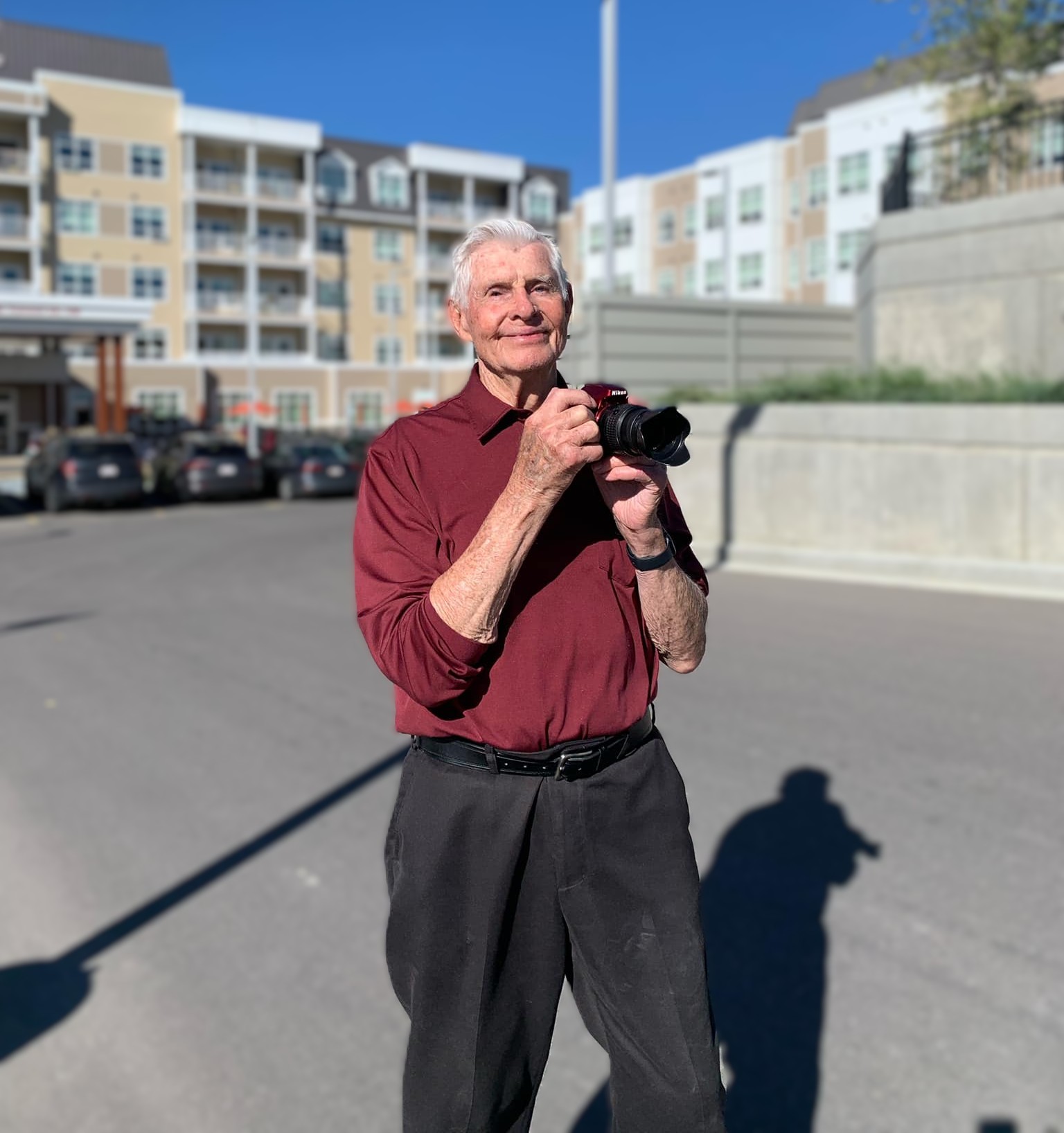
Tailored physical activities such as yoga, walking clubs, swimming, or light weight training designed to maintain physical health and mobility. Grab a smartphone or camera and head outside for an added educational or social component!
Hobby and Workshop Circles
Groups dedicated to shared hobbies such as woodworking, model building, painting, or photography, offer a creative outlet and skill development.
Book and Literature Clubs
Reading groups focused on various genres or authors, promoting discussion, debate, critical thinking, and social interaction.
Cooking and Nutrition Classes
Men’s luncheons are particularly popular at our senior residence in Saskatoon. Other options are sessions on preparing healthy meals, possibly featuring guest chefs or nutrition experts, that also serve as a social event.
Men’s Friendship Club
Every Friday at 3 p.m. at Cataraqui Heights senior living in Kingston, ON the Men’s Friendship Club gathers in the private dining room, bringing together a steady group of about nine regulars. The atmosphere is relaxed and welcoming, guided by just two simple rules: no Canadian politics and no religious discussions. And don’t worry, when Health & Wellness Director Natasha Edwards delivers beverages and snacks, she’s “not listening”!
Music and Performance Groups
Encouraging musical talents through choir groups, instrument playing sessions, or listening parties that explore various music genres and eras are always popular.
Sports and Games Tournaments
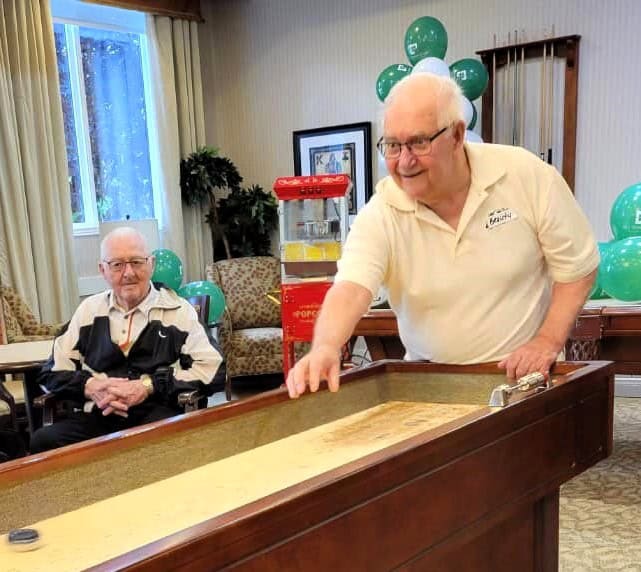
 Friendly competitions in games like chess, billiards, golf, or bowling foster community spirit and friendly rivalry.
Veterans’ and Historical Societies
Groups focused on sharing historical interests, military experiences, or working on projects related to local or personal history. Recently, men at College Park residence in Regina went to the RCMP museum. It was so popular that they have another outing in the works!
Volunteering and Mentorship Programs
Opportunities to engage with the local community through volunteer work or mentoring programs, leveraging the life experience and wisdom of retirees to benefit others.
If a resident is interested in challenging fellow residents to a new competitive activity, our Health & Wellness Directors are always open to new ideas. We have specific rooms — like the game room, movie theater, or on-site bistro — where men can host competitions or watch parties and hang together.
Celebrating Men on November 19th: International Men’s Day
Every November 19, the world celebrates International Men’s Day: a dedicated day to recognise the positive value men bring to their families, communities and society at large. More than a simple acknowledgement of the importance of men’s well-being, International Men’s Day puts a spotlight on male role models, opens conversations around mental health, fatherhood, and purpose, and encourages us to support men—and boys—everywhere. For men living in retirement communities, this day offers a meaningful backdrop: a chance to reflect on the friendships built over a good Scotch and beyond; to celebrate the contributions they continue to make; and to renew their sense of connection and shared purpose.
As our population continues to age, the role of men’s groups in retirement homes will become increasingly important in supporting healthy and fulfilling aging. Encouraging the development and participation in these groups can have a profound impact on individuals and communities alike, underscoring the importance of social connection and support at every stage of life.
Contact us today to find out about the amazing activities and amenities available to men in an ASC residence near you.
Writer – Julianna McLeod
Julianna is a health and wellness expert at All Seniors Care and our Director of Social Engagement & Communication. Her mission is to create content that empowers seniors to form sustainable solutions for lasting health and happiness. She is an experienced writer, editor, and Recreational Therapist living in Toronto.